

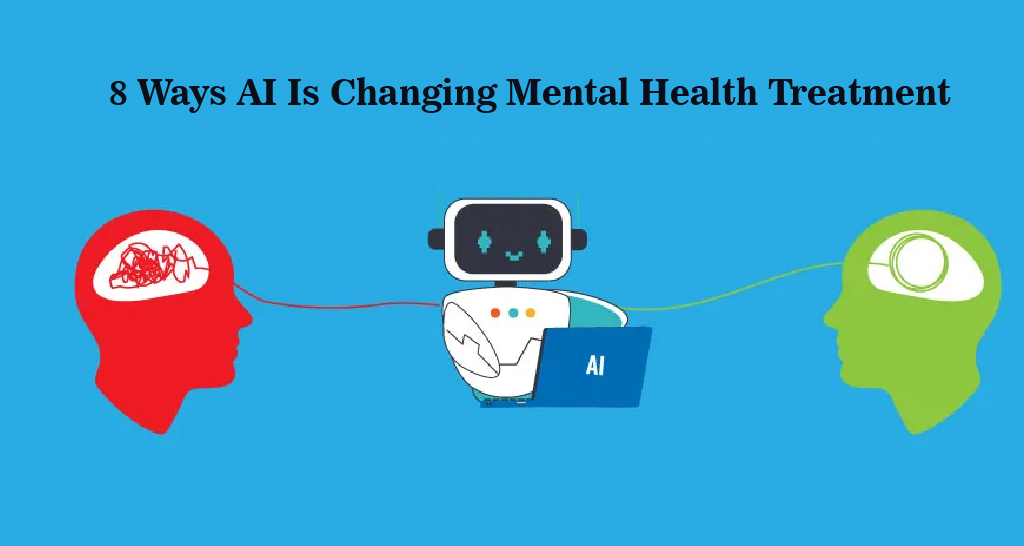
Artificial intelligence is changing healthcare very quickly, and mental health treatment is one of the areas that is changing the most. Technology is helping doctors find mental health problems early, give more personalised care, and make treatment available to millions of people. Examples include AI-powered therapy applications and predictive analytics. These new technologies cannot take the position of human therapists, but they are becoming useful tools for both patients and professionals. These are eight ways that AI is transforming how we handle mental health today.
- AI-Powered Chatbots for Emotional Support
Therapy chatbots are one of the most obvious ways that AI is being used in mental health care. People can talk to AI systems through text or speech using these digital tools. They can get coping skills, exercises to help them control their moods, and encouraging interactions. Chatbots are available 24/7, so people can get help whenever they feel anxious or upset. These kinds of tools are especially helpful for those who cannot go to a therapist right away or who do not want to talk about their problems in person.
- Early Detection of Mental Health Disorders
AI systems are being used to find early signs of mental health problems like bipolar disorder, sadness, and anxiety. By looking for trends in electronic health records, lifestyle data, and behavioural signals, AI systems can find risk factors before symptoms get so bad that they are fatal. Doctors can treat a problem faster if they find it early. This not only makes things better, but it also keeps things from getting worse.
- Personalized Treatment Plans
Various people experience mental health issues in a variety of ways; everyone requires a separate treatment strategy. AI technology may examine a great deal of information about a patient to develop individualised treatment plans. This information may include the patient’s symptoms, the effectiveness of their medications, and the way in which they live their lives. In addition, these systems can immediately modify their recommendations if a patient’s circumstances change. This allows for greater adaptability and a more rapid response time.
- Continuous Monitoring of Mental Wellbeing
AI systems can keep an eye on mental health all the time, unlike typical therapy sessions that happen once a week or once a month. A lot of mental health applications keep track of how you feel, how well you sleep, and what you do every day. AI can find rapid changes in this data that could mean that someone’s mental health is getting worse. Clinicians can then get notifications and step in before a catastrophe happens.
- Virtual Reality and AI-Assisted Therapy
AI is also making virtual reality (VR) therapy work better, notably for those with PTSD, anxiety disorders, and phobias. Virtual reality (VR) environments allow therapists a safe space to help their patients face their fears or traumatic experiences while they are doing therapeutic exercises. Artificial intelligence systems make these simulations better at responding to how each patient feels. This makes exposure therapy work better and be more specific to each patient’s needs.
- Expanding Access to Mental Health Services
It is one of the most significant issues that exists in the field of mental health care all over the world because there are not enough qualified professionals. To assist bridge this gap, artificial intelligence technologies provide large groups of people with digital support that can grow along with them. The use of artificial intelligence (AI)-powered apps and platforms enables individuals to obtain immediate assistance, stress-relieving activities, and educational materials in locations where there are a limited number of mental health services. This eliminates the need for individuals to wait weeks or months for an appointment.
- Reducing Administrative Burden for Clinicians
A lot of the time, those who work in mental health must do office work and record patient data manually. AI can accomplish a number of these activities on its own, such drafting session notes, looking at patient data, and helping doctors make decisions. AI helps therapists and psychiatrists spend more time with their patients and create meaningful therapeutic relationships by cutting down on the amount of paperwork they must undertake.
- Integrating Data Across Healthcare Systems
It is possible for artificial intelligence to create comprehensive patient profiles by merging data from a variety of sources, including electronic health records, wearable devices, and therapeutic apps. Because of this integration, it is now much simpler for medical professionals, such as doctors and therapists, to collaborate with one another and monitor the development of a patient during their treatment. Improved treatment outcomes and improved coordination of care are the ultimate results of this effect.
Conclusion
By making mental health care more accessible to a greater number of people, artificial intelligence is making it easier to receive customised care. The provision of mental health treatment is improving all around the world because of the introduction of new technologies. This is something that may be seen in robots that use artificial intelligence to provide emotional support around the clock, as well as in predictive analytics that identify mental health problems earlier.