
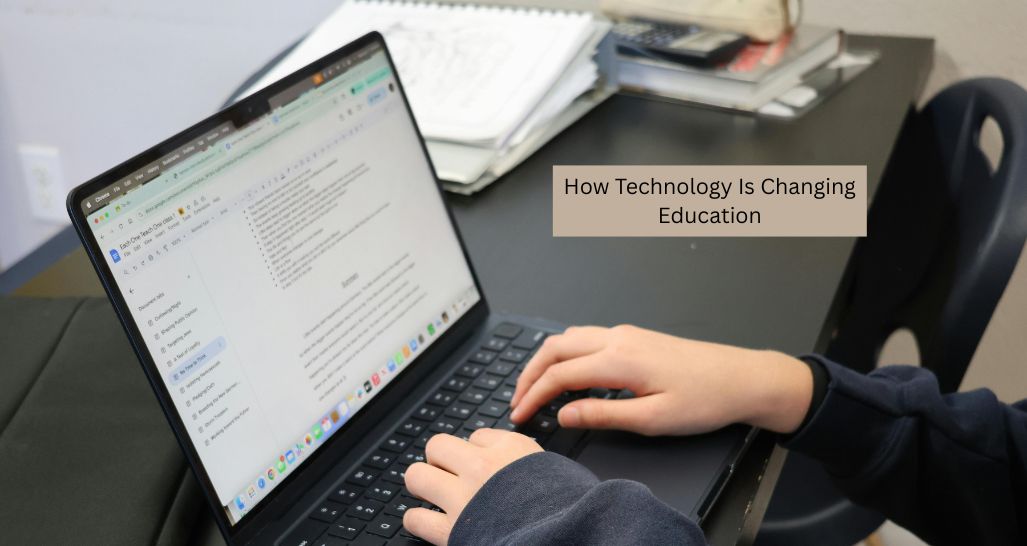
A few decades ago, it would have been unlikely to imagine the way technology is revolutionising education. The way in which students study and professors impart knowledge is being reshaped by modern technology. This includes the use of virtual reality and artificial intelligence, as well as online learning platforms and digital classrooms. Education is becoming more accessible, interactive, and personalised for students all around the world because of the use of novel tools by educational institutions such as schools and colleges.
The growth of online learning is one of the most important changes that has happened in education. Digital platforms have made it possible for students to access their classes, lectures, and other study materials from anywhere with an internet connection. Students can now learn at their own pace and on their own schedule, which has opened more educational opportunities beyond the walls of traditional schools. Also, the rise of internet education has made it possible for those living in poor or rural areas to get high-quality educational materials that they could not get before.
In many ways, technology has changed the way schools function. One of the most important changes is the move toward more individualised lessons. Smart computers and adaptive learning tools can tell how well a student is doing in school and then change how hard the lessons are for them based on that. Students do not have to keep up with the rest of the class. Instead, they can have learning experiences that are specifically designed for them and their needs. People who are good at this plan can move through it faster, and people who are having trouble get extra help.
Digital learning tools have also made classes more fun and participatory. More teachers are employing movies, interactive simulations, and multimedia presentations to help students understand difficult ideas. Students find it easier to learn hard concepts when they are presented in a visual or interactive way. This is especially true for science, math, and engineering. Digital tools also inspire people to take part, which makes learning more fun and useful.
Virtual reality (VR) and augmented reality (AR) are also becoming more important parts of today’s education system. These tools enable students to find new ways to learn and explore virtual worlds. For example, students who are learning about history can virtually visit previous civilisations, while students who are learning about biology can see the human body in three dimensions. Students learn better when they have experiences like this because they make learning more real and memorable, which helps them understand the subjects they are studying better.
Technology is also making it easier for students and teachers to work together and talk to each other. Online discussion boards, messaging apps, and video conferencing tools like Skype and FaceTime make it easier for students to work together on projects, ask questions, and share ideas. Digital tools that let students work together on projects make it possible for them to do group work even when they are not all in the same place. Students are more prepared for today’s sectors, which are becoming increasingly typified by distant collaboration.
Another key benefit of technology in education is that it makes it easier to get information. Students can learn a lot via the internet, which has digital libraries, research databases, and educational websites. Students can learn more about different subjects by using a variety of resources instead of just textbooks. This easy access to information makes people want to learn on their own and think critically.
Technology is also assisting teachers to become more efficient in their profession. Learning management systems let educators organise course materials, track student progress, and connect with them more efficiently. Teachers can use these technologies to spend less time on administrative work and more time coaching and teaching pupils.
Also, with the help of educational technology, classrooms may be more welcoming to students of different backgrounds. A more inclusive classroom environment may be possible for students with impairments or language difficulties using speech-to-text software, screen readers, and language translation tools. These tools allow students with a wide range of abilities and backgrounds to study more efficiently.
Certain problems come with employing technology in the classroom, though. The digital divide is a huge problem because some youngsters do not have consistent internet or digital devices. This imbalance can lead to unequal opportunities for education. Schools and governments must work together to make sure that all kids can use technology to improve their learning.
There is also the possibility of getting distracted, which is another problem that needs to be fixed. Because it is so easy for students to access social media, smartphones, and other forms of entertainment from their phones, they may have trouble staying focused on their schoolwork. Because of this, teachers and schools should encourage their pupils to use technology in the right way and make sure that their classrooms are well-balanced, using both digital tools and conventional teaching methods.
In a nutshell, the way in which education is delivered and experienced is undergoing a significant transition as a direct result of the impact that technology makes. Classrooms all around the world are witnessing a transition as a direct result of technological advancements happening in the classroom. The expansion of access to knowledge, the improvement of engagement, the promotion of cooperation, and the facilitation of customised learning are all outcomes that result from these improvements. As the educational institutions continue to adapt to these advances, the use of technology will become an increasingly crucial component in the process of preparing students to tackle the problems that the modern world brings.