
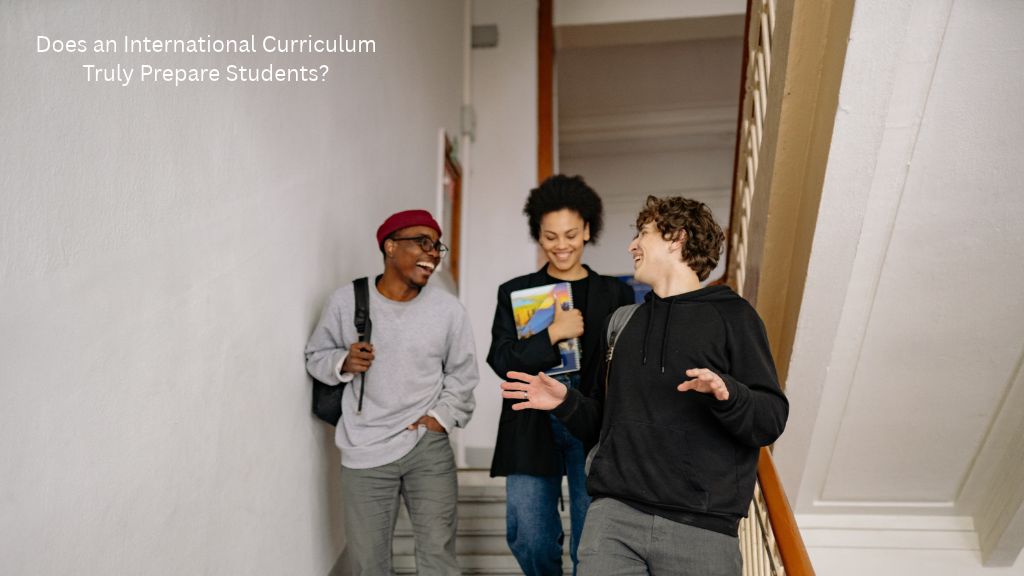
An international curriculum can give students the academic knowledge, cultural awareness, and practical skills needed to study and work across borders. Its value, however, depends on how well a school turns curriculum goals into daily learning. Families should look beyond course labels and examine teaching quality, assessment methods and opportunities for students to apply what they learn.
The Demand for Cross-Border Competencies
Employers and universities increasingly expect students to communicate across cultures, evaluate unfamiliar information, and work with people who hold different perspectives.
Moreover, a strong international curriculum might ask students to compare how several countries address water scarcity, then present a proposal to classmates from different backgrounds. This combines subject knowledge with research, teamwork, and respectful discussion.
Parents can ask how often students collaborate, defend ideas with evidence, and revise work after receiving feedback. Classroom examples reveal more than broad claims about preparing children for a connected world.
Comparing Global and Local Frameworks
Families considering an international school should examine how its global framework connects with local language, history, and community life. International programs often support transferable qualifications and consistent academic expectations, while local content helps students understand the society around them.
The discussion around balancing local and global standards shows why schools need both perspectives. A student might study a global economics syllabus while researching businesses in the surrounding community. This makes abstract concepts easier to test against real conditions.
Ask which subjects follow international specifications, how local studies appear in the timetable, and where graduates typically continue their education.
Selecting the Right International School
Curriculum names alone offer limited insight into a student’s likely experience. During a school visit, request examples of student work and ask teachers how they support children who progress at different rates. Families should also review class sizes, language support, university guidance and the balance between academic study, creative work and physical activity.
Age range matters as well. A school serving children from early years through sixth form should be able to explain how skills develop between stages. For example, inquiry may begin with guided observation in primary classes before becoming independent research in secondary school.
Outcomes That Follow Graduates Beyond Campus
The clearest outcomes often appear after graduation. Students should be able to enter a new academic system, manage deadlines and communicate when expectations are unclear. Those habits help during the first semester at university, when a learner may face unfamiliar grading rules, group projects and independent reading requirements at the same time.
Academic results still matter, but families can look for wider evidence. Useful indicators include university destinations, completion rates, graduate reflections and examples of former students adapting to new countries or institutions.
A good curriculum also builds judgment. Graduates need to check sources, recognize weak arguments and explain their reasoning. These abilities remain useful long after specific course content has faded.
No curriculum can prepare a student for every situation. The strongest programs give young people enough knowledge, confidence and adaptability to respond thoughtfully when circumstances change. Before enrolling, ask the school to show how one skill develops across several year groups. A clear sequence from guided practice to independent work is often the most convincing evidence of genuine preparation.