
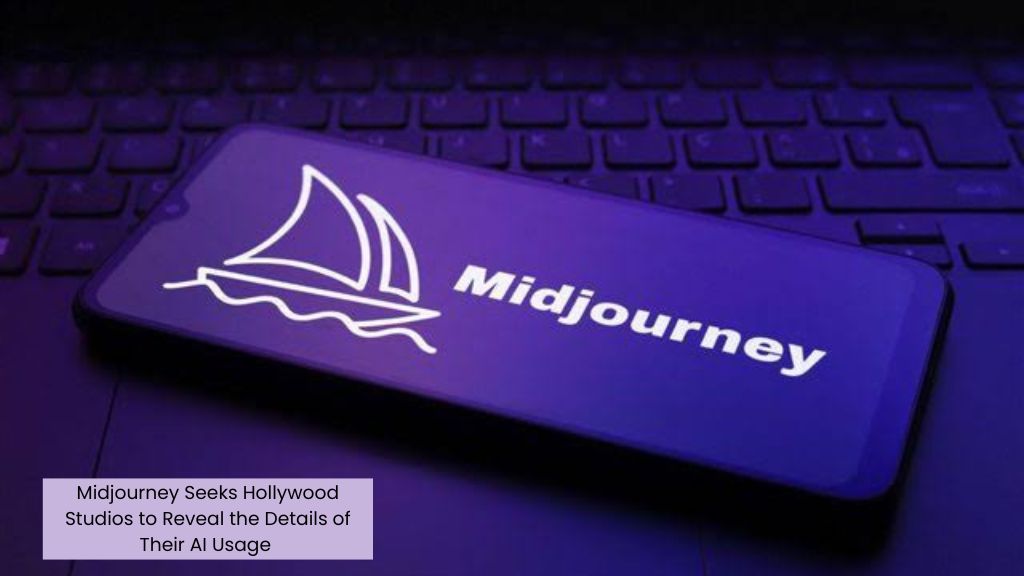
The legal battle between artificial intelligence startup Midjourney and some of Hollywood’s biggest studios has entered a new phase, with the AI company asking a U.S. court to require major entertainment companies to disclose how they use artificial intelligence in their own businesses.
The request comes as Midjourney defends itself against copyright infringement lawsuits filed by entertainment giants, including Warner Bros., Disney, and NBCUniversal. The studios allege that Midjourney unlawfully trained its image-generation models on copyrighted material and enabled users to create images featuring iconic characters without authorization. Midjourney has denied the allegations and is now arguing that the studios’ own AI practices could be relevant to the case.
In court filings, Midjourney has asked for documents detailing how the studios have adopted AI technologies, including whether they have used generative AI tools in film production, content creation, visual effects, or other creative workflows. The company contends that such information could help establish industry standards and provide context for the ongoing copyright dispute.
The request highlights the increasingly complex relationship between Hollywood and artificial intelligence. While major studios have publicly criticized AI companies for allegedly using copyrighted works without permission, many have simultaneously been exploring AI to streamline production, enhance visual effects, improve dubbing, and reduce post-production costs. Industry executives have repeatedly described AI as a tool that can complement creative professionals rather than replace them, though its adoption remains a sensitive topic.
Legal experts say Midjourney’s strategy could shift attention beyond questions of copyright infringement to broader discussions about how the entertainment industry itself is embracing AI. If the court grants the discovery request, the studios may be required to disclose internal policies, experiments, and workflows involving generative AI—information that has largely remained confidential.
The dispute is being closely watched because it could shape future legal standards governing AI training data and the use of copyrighted content. At the center of the case is whether AI companies can rely on copyrighted material to develop their models under the principle of fair use, or whether creators must first obtain licenses from rights holders. Similar lawsuits involving authors, artists, publishers, and media organizations are already making their way through U.S. courts, making the Midjourney case one of the most significant tests of AI copyright law to date.
For Hollywood, the stakes extend beyond a single lawsuit. Studios are investing heavily in AI-powered production tools while also seeking stronger legal protections for their intellectual property. That dual approach has exposed an apparent contradiction: embracing AI’s efficiency while challenging how some AI developers acquire the data used to train their models. Midjourney’s latest legal move appears designed to spotlight that tension.
The outcome of the discovery request could influence not only this lawsuit but also future negotiations between AI developers and content owners. If courts require greater transparency from both sides, the case may offer an unprecedented look into how artificial intelligence is already reshaping the entertainment industry behind the scenes.
As AI becomes increasingly embedded in filmmaking and digital content creation, the legal fight between Midjourney and Hollywood is evolving into more than a copyright dispute. It is becoming a broader debate over transparency, fair use, and the rules that will govern the next generation of creative technologies.