
In the coming years, the rate of development of the global economy will accelerate from a slow to a very rapid pace. As a result of new technologies such as digital infrastructure, biotechnology, automation, artificial intelligence, and climate change, jobs and people alike are transforming. These changes stem from the impact of these technologies. The reason for this is that entire industries are undergoing rapid change, and educational institutions are having a hard time keeping up with the pace of change. One of the most important questions that this raises is whether schools effectively prepare kids for jobs that do not now exist but will inevitably exist in the future.
Just a few short years ago, most of the fast-developing professions that exist today were unheard of. A few examples of professionals who work in these areas are those who specialise in data privacy, virtual experience designers, ethics in artificial intelligence, and sustainability analysis. Currently, they are an indispensable component of the functional operations of every firm. This is a big problem for the educational system since the future of work is fraught with a great deal of uncertainty.
In today’s world, educational institutions are no longer primarily concerned with preparing students for specific jobs or a particular career path. On the contrary, they are preparing kids for a metamorphosis that will last throughout their entire lives. There is a departure from the traditional knowledge regarding schooling brought about by this shift in emphasis. On the other hand, a significant number of educational institutions continue to develop their campuses in accordance with model systems that were prevalent at the time of the industrial revolution. These kinds of programs place a focus on memorisation by rote, on standardised testing, and on low levels of academic accomplishment.
Since the world is constantly changing, the term “career readiness” has taken on a variety of distinct meanings over the course of the generations. The hiring process is seeking individuals who possess unusual skill sets that are difficult for machines to imitate. Other crucial qualities include critical thinking, creativity, emotional intelligence, flexibility, and the ability to work across cultural and disciplinary borders.
Technical skills are becoming increasingly important, but other key abilities include the ability to think critically, be creative, and be versatile. According to several institutions, including the World Economic Forum, which cites research, most of today’s school-aged children will either occupy positions that do not yet exist or will have significantly different features in ten years. This is the conclusion that has been reached among various organisations. When viewed from this perspective, the ability to acquire new knowledge on a consistent basis is significantly more useful than the acquisition of a particular set of skills.
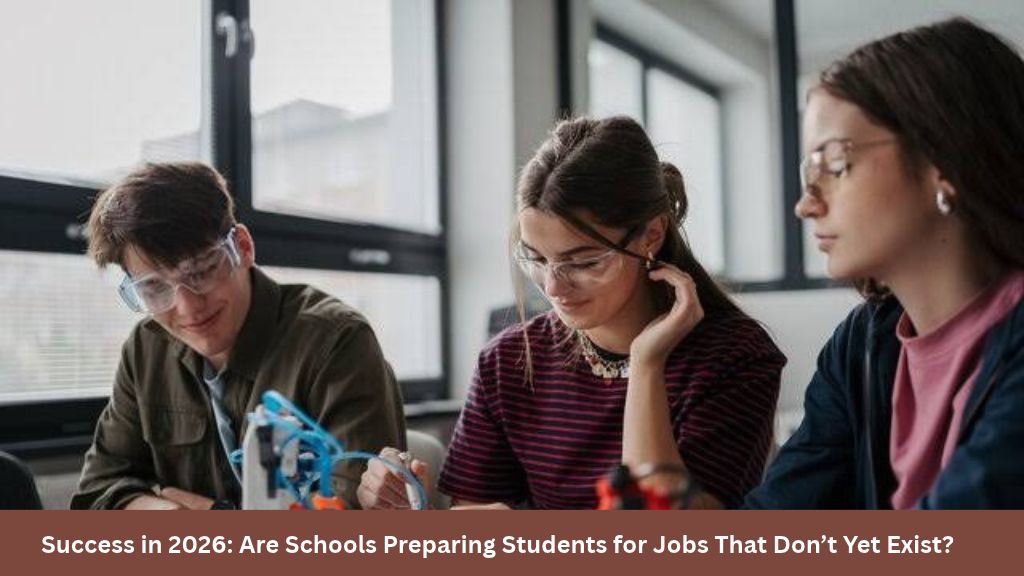
Considering this transformation, several educational institutions have begun to reevaluate the ways in which they approach the teaching and learning process. Within modern educational institutions, the emphasis is placed not only on the students’ knowledge but also on their ability to think critically. Students who are developing minds that are prepared for the future will need to have the ability to solve problems in the real world, as well as the ability to learn through project-based learning and transdisciplinary courses. The experiences that students have because of these activities help them build abilities in areas such as critical thinking, teamwork, idea testing, and course correction. These abilities are more in line with the way that contemporary businesses operate than they are with the predictable nature of traditional classes.
Canada, Singapore, and Finland are examples of countries that have made changes to their educational systems to place a greater focus on competency-based learning rather than standardised testing. The provision of opportunities for children to express their creativity, acquire technical literacy, and improve their overall health is a priority for these programs. This is because scholastic achievement does not necessarily ensure future employment prospects. The awareness that a more adaptive society, as opposed to one that is dependent on static information, will be the driving force behind future advancement is demonstrated by these approaches, which show that this realisation is beginning to sink in. Although there are no perfect systems, this is nonetheless the case.
Notwithstanding these gains, there are still substantial deficiencies that need to be addressed. Standardised testing is still given a significant amount of importance in most of the world’s educational institutions. This influences the substance of classroom instruction as well as the delivery of that instruction. The fact that this focus provides little room for the kinds of experimentation, curiosity, and failure that are necessary for an idea-driven economy is not just paradoxical but also quite surprising. They, like everyone else, are having a difficult time. A significant number of individuals are tasked with the responsibility of preparing children for a world that they have never been prepared for, and they typically do so without the appropriate educational assistance or training.