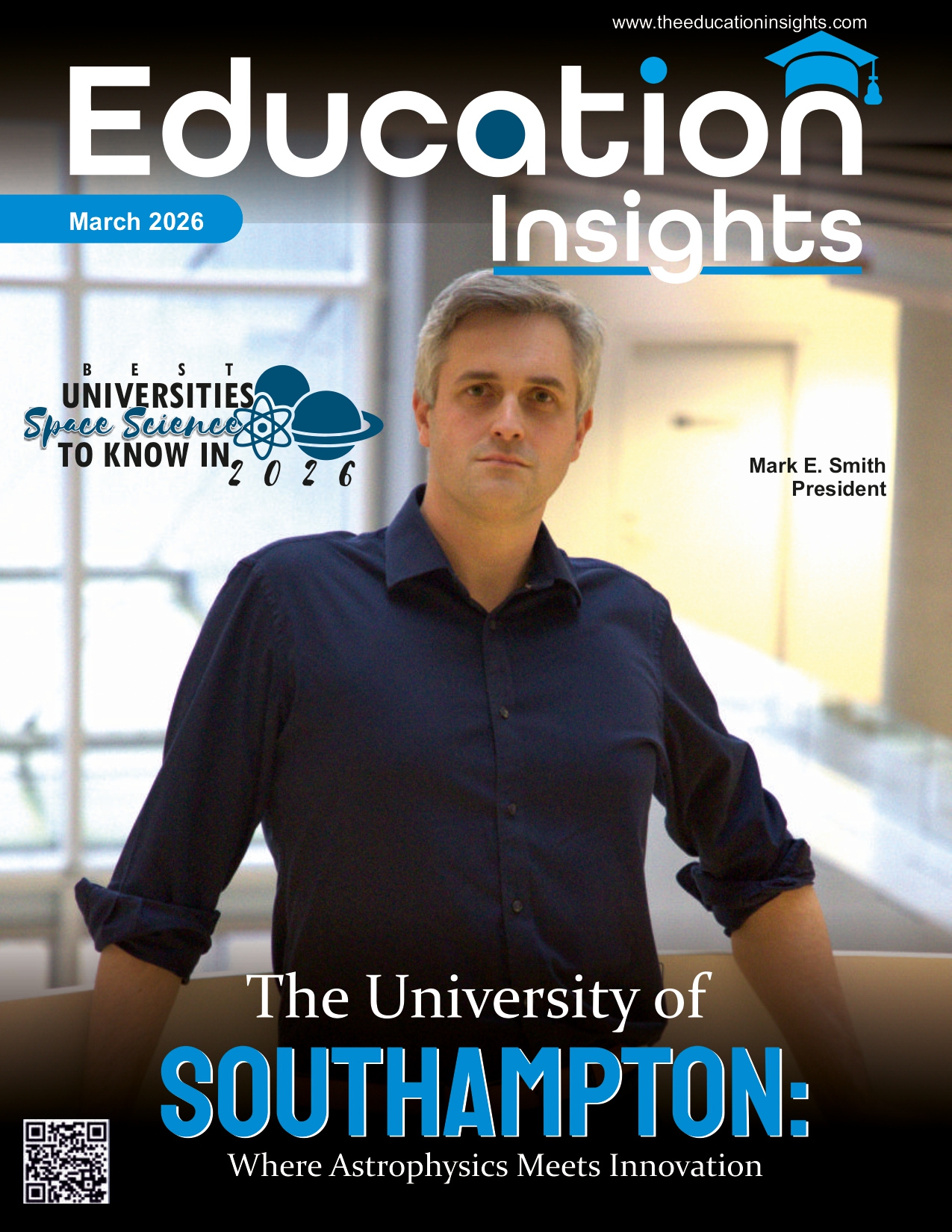

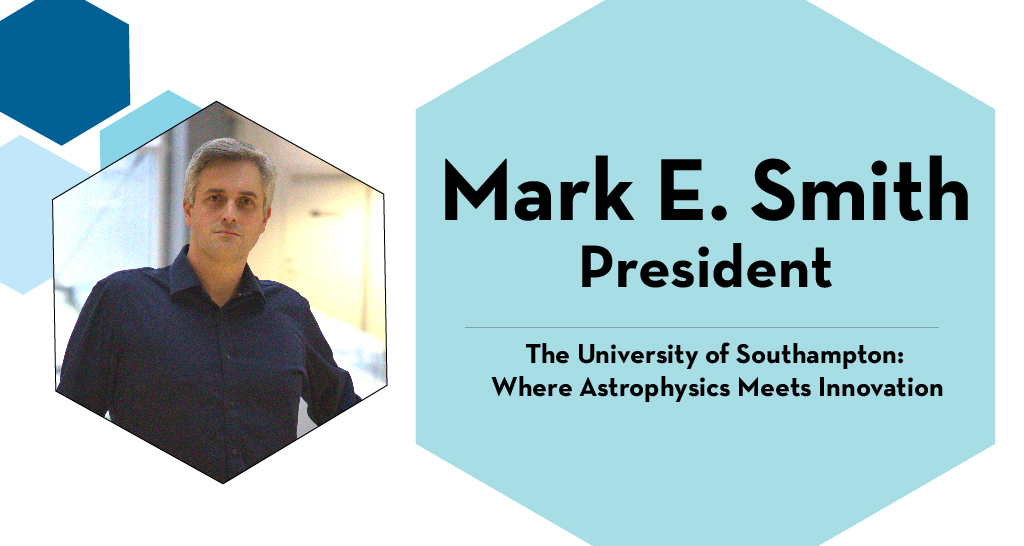
As a leading research-intensive institution, the University of Southampton is dedicated to delivering world-class education and empowering students to achieve academic and professional excellence. With a rich history and a strong global reputation, the University of Southampton offers a broad portfolio of undergraduate, postgraduate, and online programmes designed to provide students with extensive academic choice and flexibility. Across its campuses in Southampton and Winchester in the UK, and India and Malaysia, as well as through its international partnerships, the University remains committed to ensuring accessible, high-quality learning opportunities that make a meaningful impact locally and globally. Under the strategic leadership of its academic and administrative teams, the University of Southampton continues to advance innovation, foster student success, and uphold its mission of shaping future leaders and driving positive change through education and research.
From Black Holes to Dark Energy
Southampton has a legacy reputation within space science and astrophysics, built by world-leading researchers with roles within cutting-edge missions and instruments. The University has a strong specialism in compact object (black hole and neutron star) physics and time-domain astrophysics, using surveys such as the Vera C Rubin LSST and the Dark Energy Survey (DES). The work its researchers are carrying out touches on fundamental questions and topics, including the nature of dark energy, the formation of structure in the Universe, the nature of hyper-dense matter, understanding how super-massive black holes grow, and searching for black holes in our Galaxy. This cohesive set of topics enables rich discussion and collaboration, and a fantastic community in which to work. Southampton’s world-leading research is further supported through productive collaboration with the School of Physics and Astronomy’s other research groups (Theory, Quantum Light and Matter) and between Schools (Maths, Engineering, Optoelectronics Research Centre and Zepler Institute), all of which are world-leading in their own right.
Creating a Rich Research Environment
The University of Southampton is highly and directly supportive of involvement with major astrophysical surveys (such as 4MOST), which supports group activities and enables major results across a variety of topics. The University is also a proud signatory of the Researcher Development Concordat, reinforcing its commitment to the career development and well-being of its postdoctoral researchers.
To sustain world-leading research, the University recognises that robust support for securing funding is essential. Southampton’s central Research and Innovation Service (RIS) provides comprehensive, joined-up assistance through grant-writing workshops, bid-development programmes, interview preparation, and tailored mentoring. We also have a dedicated, in-house, tech start-up accelerator, Future Worlds, who enable commercialization and enterprise. This integrated infrastructure ensures that researchers at every career stage have the tools they need to compete successfully for major funding opportunities and grow their careers.
Engaging in Hands-on Research
All of Southampton’s undergraduate students carry out a final year project, supervised by one of its researchers. Within the space science remit, this might include studies of auroral physics using artificial intelligence, studies of nearby galaxy populations, or understanding how super-massive black holes are fed. Southampton’s highest-achieving students have access to exceptional opportunities, including completing a full research year at Harvard’s Center for Astrophysics in Boston or participating in the University’s own Year of Research in Southampton programme. Both pathways provide an outstanding foundation for postgraduate study and future careers within the space science sector.
In addition to these ‘flagship programmes’, the University of Southampton is a core member of the South East Physics Network (SEPNET), which arranges industrial placements, including within the space sector, and also the JUPITER programme, where students design and fly a cube-sat mission. The University expects these unique opportunities to continue to expand and, in doing so, deliver top space science graduates for the future health of the global space sector.
“One of the key drivers for the development of science and technology in the space sector is exploitation, i.e., astrophysics,” says Prof. Matthew Middleton. “Rather than siloing these aspects of space science, at Southampton, we endeavor to bring them together, as such cross-pollination has the benefit of generating new ideas, partnerships, and overall success.”
The Global Leader in Space Research
Southampton’s primary ambition is to harness its established research strengths and align them with the UK’s evolving space agenda. The University occupies a uniquely advantageous position within the national landscape: it owns world-class cleanroom facilities and hosts pioneering research groups and spin-outs working at the forefront of new materials, quantum optics, and silicon photonics. This rare combination enables Southampton to take cutting-edge ideas from fundamental research through the full development lifecycle—concept, fabrication, demonstration, and ultimately commercial spin-out.
This approach positions the University to occupy a unique place in the space sector and is further enhanced by its membership of the Quantum Hubs and hosting an EPSRC-funded Centre for Doctoral Training in Quantum Science and Technology. It is also building links across the South of England as a member of the Space South Central space cluster, and is located only a short distance from the Harwell space cluster.
Building Relationships is Key
Southampton has a range of collaborators across government agencies, industry, and academia, all of which are of critical value. Looking ahead, the University plans to consolidate its relationships with partner institutions in the Space South Central cluster, build closer ties with the Harwell innovation campus, develop closer ties with industry in the South of England, as well as work upstream with agencies (e.g., UKSA, ESA, NASA, ISRO) to help determine the direction of future R&D funding. In terms of astronomy missions, Southampton is a member of LISA, the first space-based gravitational wave interferometer, the Vera C Rubin LSST, which will revolutionise our understanding of the transient sky, ESA’s Euclid mission, which is mapping the evolution of galaxies and probing cosmology, and ESA’s planned NewAthena X-ray mission, which will probe the hot and energetic Universe. This involvement will position Southampton at the forefront of astrophysics for decades to come.
Picture of the Future
The global space sector is poised for exponential growth in the coming decades, and universities will remain the engines driving this expansion. They supply both the highly skilled workforce the industry urgently needs, and the low-TRL innovation that fuels breakthroughs in propulsion, communications, materials science, and beyond. Yet for universities to fulfil this mission effectively, they require stability—particularly in funding and long-term strategic support.
In recent years, higher education and research councils have faced significant challenges, creating uncertainty at a time when sustained investment is essential. “However, there is reason to be optimistic given the recognition of the role the academic sector plays within the space economy,”- says Prof. Middleton. “For the UK – a leader in global space research – to thrive, the UK government must proactively support our higher education institutions.”