

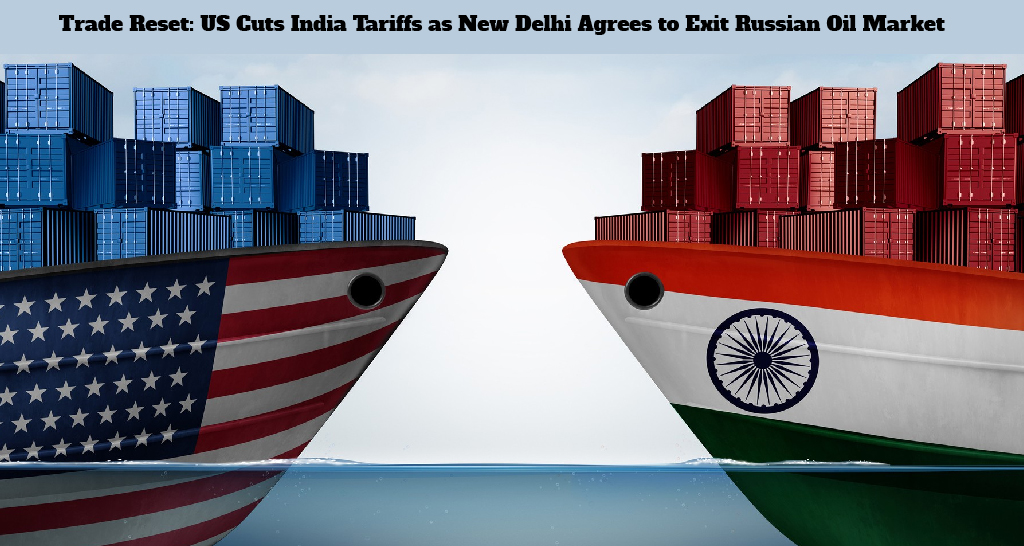
The United States and India have struck a noteworthy deal regarding trade and energy. Under this agreement, Washington will reduce tariffs on Indian goods to 18%, while New Delhi has committed to gradually cutting back on its imports of Russian crude oil. This development represents a significant shift in their bilateral relations and indicates a closer strategic partnership between the two nations, especially considering the evolving global economic and geopolitical landscape.
With the new deal in place, U.S. tariffs on a broad array of Indian exports are set to drop significantly from the high levels that have been in effect over the past year. Indian manufacturers and exporters have been grappling with hefty duties that have put a strain on industries like textiles, pharmaceuticals, engineering goods, and gems and jewellery. The shift to a standard 18% tariff is anticipated to relieve some of the pressure on exporters and help Indian products regain their competitive edge in the U.S. market.
In a significant move, India has pledged to stop importing Russian oil, which had surged since the start of the Russia-Ukraine conflict, largely due to attractive discounts. This decision marks a major change in India’s energy policy, as it seeks to balance economic needs with increasing geopolitical pressures from its Western allies. As part of a wider strategy to diversify its energy sources, New Delhi is anticipated to ramp up its purchases of oil and energy products from other suppliers, including the United States.
U.S. officials are calling this deal a game-changer, linking trade incentives with strategic cooperation. It is also set to pave the way for India to ramp up its purchases of American products in various sectors, including energy, defense, technology, and agriculture. Ongoing discussions are focused on lowering Indian tariffs and non-tariff barriers for certain U.S. goods, though we are still waiting for specific timelines to be revealed.
Indian officials expressed their approval of the tariff cut, highlighting its potential to enhance exports, bolster domestic manufacturing, and boost investor confidence. The market responded positively, with hopes that better trade access could help mitigate global demand uncertainties and the slowdown in key economies.
Despite the hopeful outlook, analysts are warning that the implementation will be under scrutiny. Stopping Russian oil purchases might lead to some short-term costs for India’s refiners, and the overall economic impact of the tariff reduction will really depend on how widely it is applied across different product categories. Having clear legal frameworks and engaging in follow-up negotiations will be essential to turn this political agreement into real economic benefits.
The deal signifies a fresh chapter in U.S.–India relations, merging trade benefits with a strategic shift in energy collaboration. If everything goes according to plan, this could turn out to be one of the most significant economic agreements between the two nations in recent years.